
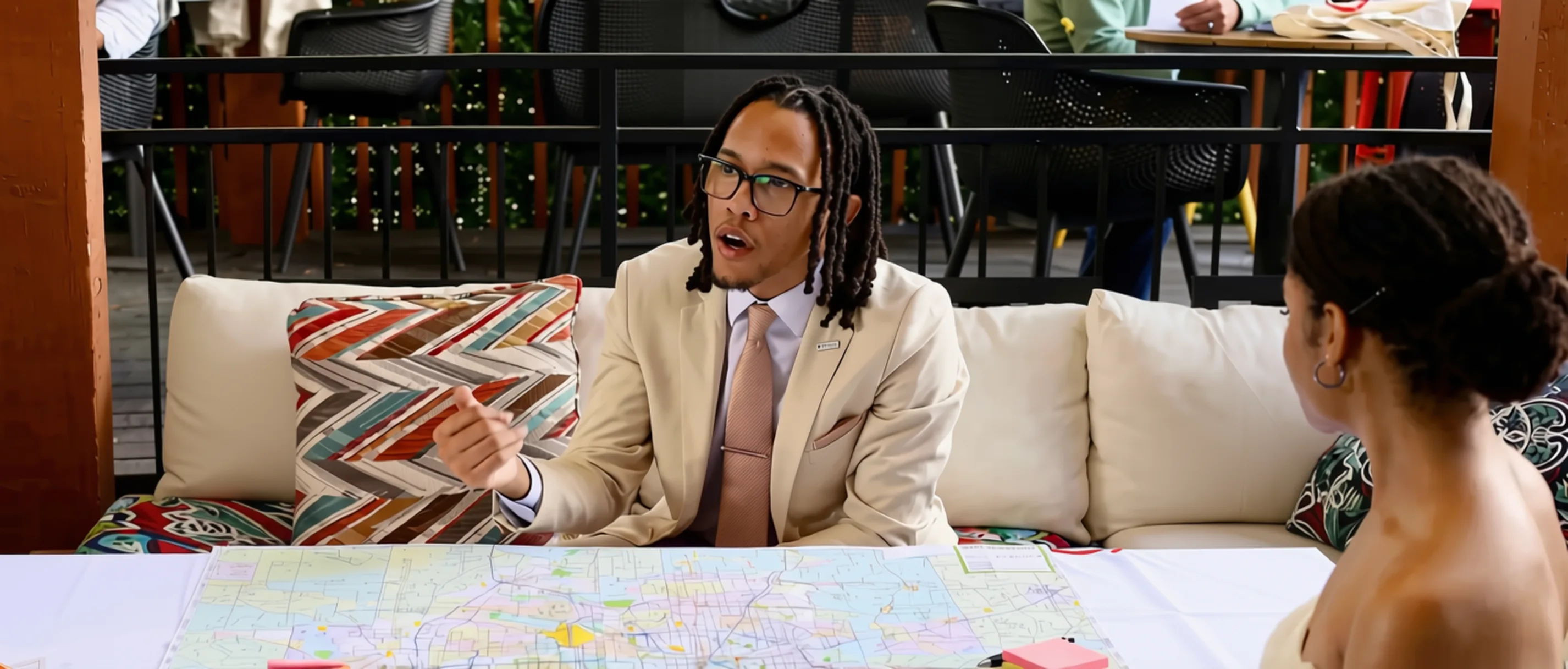
Architecture for mobilizing
Relationships, organized. The systems that turn a first conversation into a commitment, a commitment into a coalition, and a coalition into power.
Read the planWe are the most awake generation this movement has ever fielded. And being awake was never the assignment. Awakening is the raw material; architecture is what we build with it. Across Texas, young professionals have already turned conviction into working systems: a federated coalition registering voters and delivering services, a policy platform tracking power in real time, a playbook any chapter can pick up and run. None of it was built alone. None of it is finished. That is the invitation: every chapter, every voice, one build.
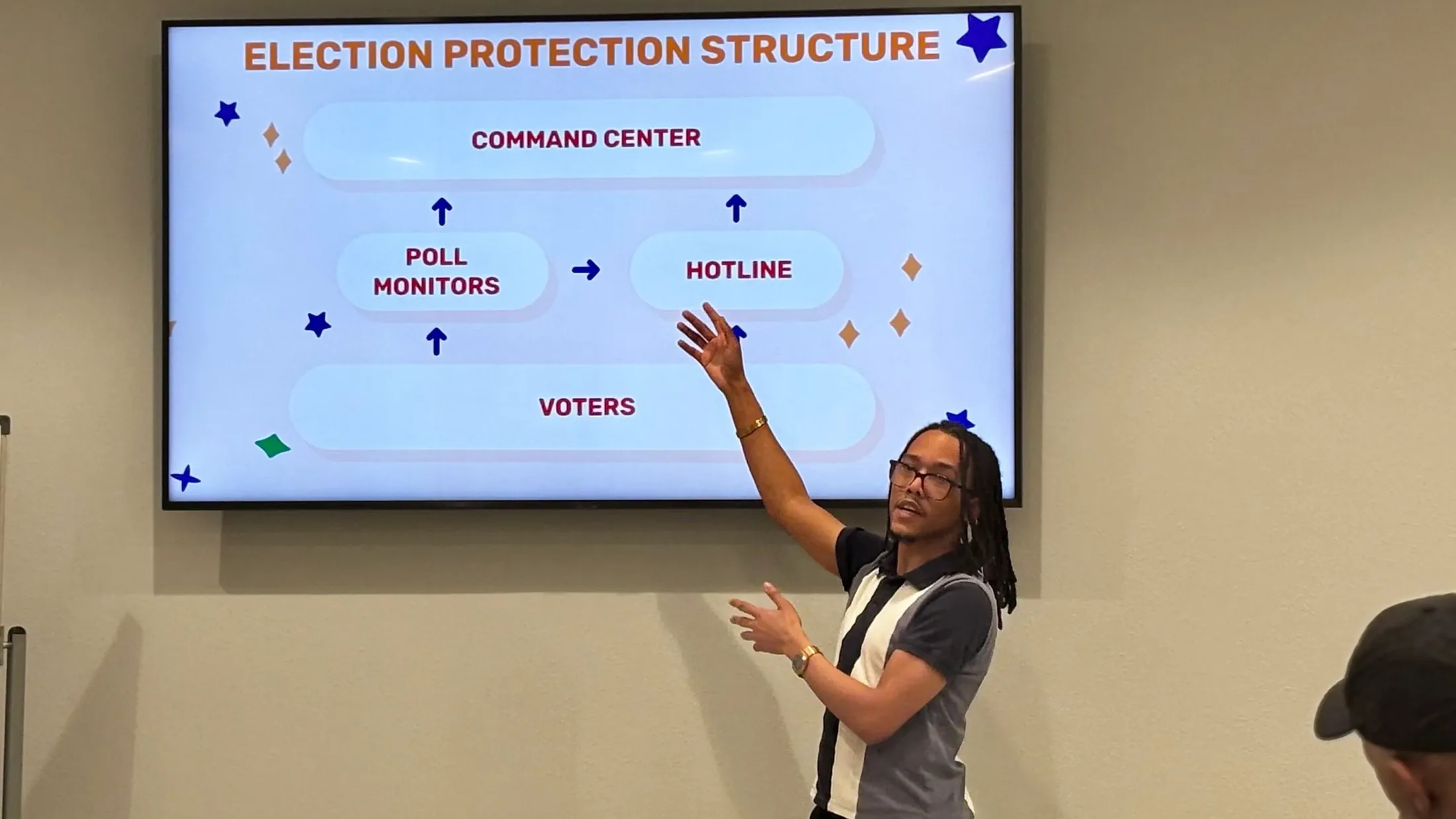
The Platform
Not a promise. Not a slogan. A structure: built level, built load-bearing, built so every chapter can stand on it and reach higher. These three commitments hold the weight.
Relationships, organized. The systems that turn a first conversation into a commitment, a commitment into a coalition, and a coalition into power.
Read the planThe fight is not waiting on a courtroom. We organize in every hall where power moves: city councils, school boards, county commissions. The defense stands before the ruling lands.
Read the planAdvocacy that ends at the press release is theater. Wins convert into ownership, wealth, and institutions our communities hold, the way this movement has measured victory for over a century.
Read the planThe Throughline
East Carroll Parish, Louisiana. Delta country, majority Black. For forty years, from 1922 to 1962, not one Black citizen was registered to vote there. Not because they didn't try. Because one local official, the registrar of voters whose signature decided who qualified, used a rigged test and an impossible voucher rule to say no, every time.
The community organized anyway. For fourteen years the local voters league kept records of every attempted registration: through cross burnings, through shootings, through an economic boycott meant to starve them out. Those records became a federal case. On July 12, 1962, a federal judge hand-signed voter certificates for twenty-eight named Black citizens. My family carries the names of those who stood. Benjamin Blockwood is among them.
The registrar's pen never disappeared. Today it draws district maps, purges voter rolls, closes polling places. Different paper. Same hand. And the lesson East Carroll paid forty years to teach still holds: the law did not save that parish. The organizing did, and the organizing is what made the law usable. Build the infrastructure first. That is this campaign.
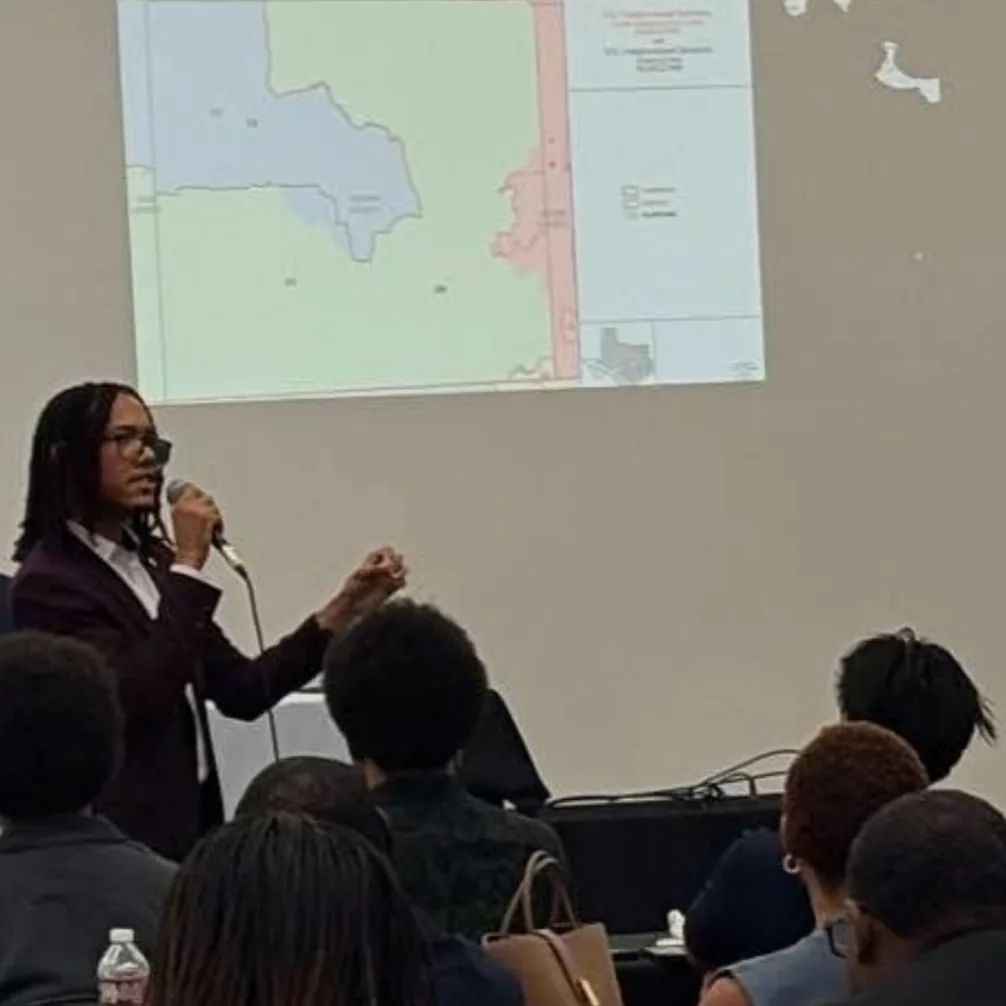
Receipts
The record is proof of method, not a résumé. In one spring, a North Texas organizing summit trained fifty organizers and certified ten new volunteer deputy voter registrars, three-quarters of them brand-new to the movement. Three civic affiliates across Texas federated into one statewide coalition, founded and already activating volunteers, registering voters, and delivering direct services right now. A February chapter activation lifted turnout 364 percent. $7.9 billion in regional bond authority was tracked across four jurisdictions and published at dfwbond.guide, so voters could follow the money before casting the ballot. And the Liberation Toolkit, a national civic-engagement playbook co-authored from Texas to combat gerrymandering, is already running in chapters across the country. The numbers below happened. They are the floor, not the ceiling.
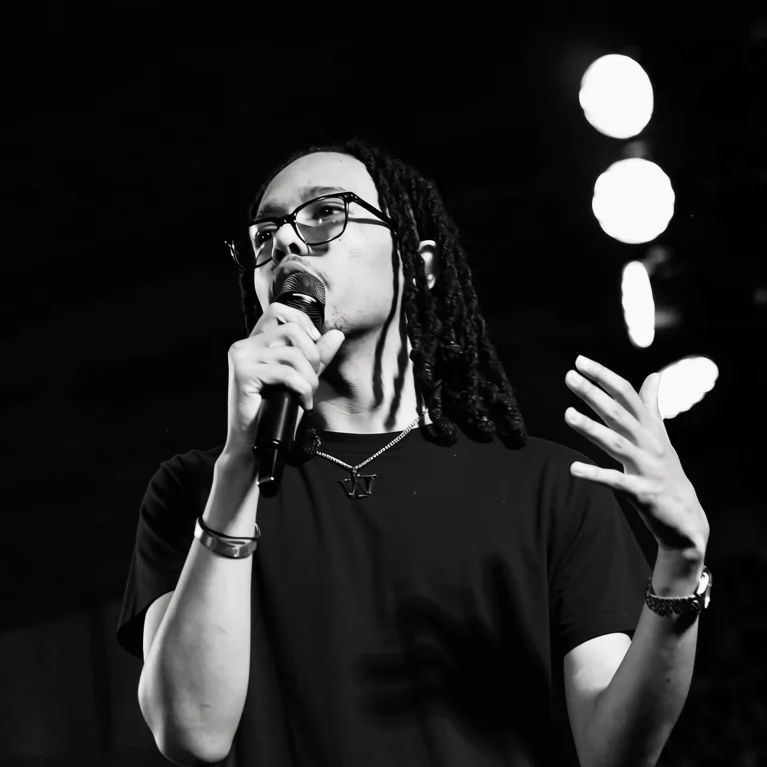
history → ideology → leadership → unity → power → program
Jesse Jackson named the chain: no program without power, no power without unity, no unity without leadership, no leadership without ideology, and no ideology without your history. Read it backward, it's a diagnosis. Read it forward, it's a blueprint. Built right, organizing isn't sentiment. It's a science: disciplined, repeatable, made to be handed off.
This work travels because none of it was one person's feat in one state. The Liberation Toolkit, whose fair-representation playbook chapters are running right now, wasn't shipped out of Texas. Organizers from every region of the movement built it together, in working groups, each carrying a piece. History became strategy, strategy became systems, and systems became power, real only once it converts to ownership. Otherwise, it was only noise.
So a chapter anywhere doesn't begin at a blank page. It begins where the method already points: aim a tracker at your own statehouse, lock arms with the organizations already beside you, and run a playbook the movement wrote together.
The record is Texas. The method is the movement's.
THE CHARGE
The question was never whether we're awake. It's whether we show up to build. Wins aren't declared; they're ratified by the people in the room. If the room says yes on July 30, the term begins July 31, and ninety-five days later, the country votes. The first proof of this term is what we build for November 3. Add your name to the record. Be in the room July 30. One voice: yours. One fight: ours. One movement: everybody in.
The room decides July 30.
Take Action
Stay close. We'll reach out when the slate drops, when there's a moment to move, and when we need you.
Put your name on the record. The form is built to protect every endorser. No one gets put in an improper position.